by Patricia Butter
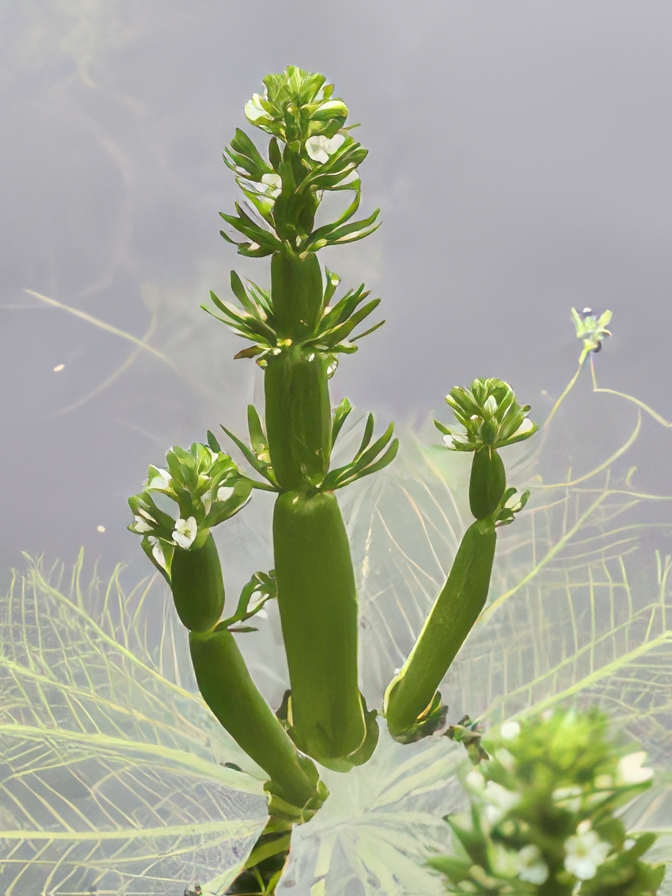
If you hiked past the mill pond near the Michigan Road parking area this past spring, you may have noticed an abundance of unusual-looking plants. These plants were the stuff of legend, a rare plant that had been listed on a New York Natural Heritage Report from 1999 from a location in the vicinity of Honey Hollow, and despite multiple searches, not relocated. And suddenly, there they were, hundreds of beautiful American Featherfoil, Hottonia inflata, plants blooming to our delight and wonder. It is likely that the appearance of these plants was thanks to park management’s skillful and sensitive restoration of the mill pond spillway in 2024, which provided the conditions and habitat for the seeds to germinate and grow.
Not all rare plants are as enigmatic as Hottonia, and they often have specific habitat requirements. As part of their dedication to supporting the stewardship of these special plant communities, the Friends of Trailside Museum initiated the flora project in 2022. Through botanical surveys conducted by me and my colleagues Devon Cummings and Daniel Atha over the past three years, the list of rare plants species known to occur at Ward Pound Ridge Reservation has increased from a half dozen to 25 species. By funding the mapping and documentation of these populations, the Friends have enabled park management to have the data necessary to make well-informed management decisions. The results of our fieldwork have demonstrated the remarkable diversity preserved in this unique natural area. In addition to 25 rare species, out of the 835 plants documented thus far, 45 taxa were recorded for the first time from Westchester County.
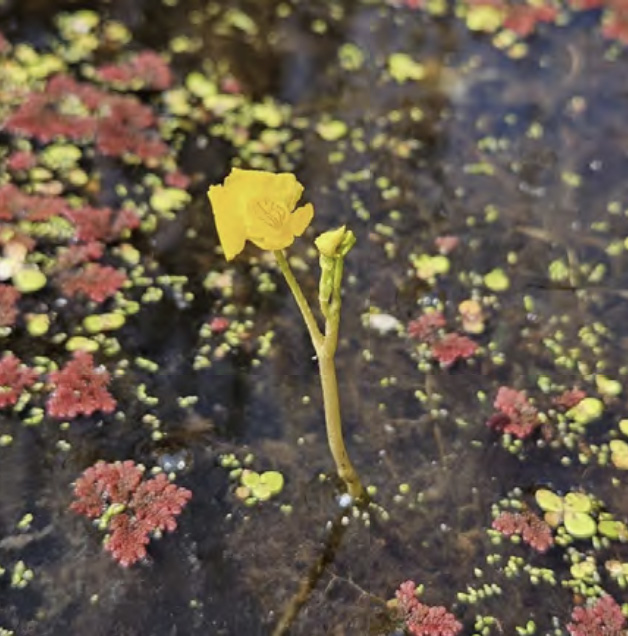
One of these plants, an aquatic carnivorous plant called a Bladderwort, Utricularia tenuicaulis, is the first record of this plant from northeastern North America. This discovery and further study combining fieldwork and genetic analysis has led to the addition of this species to the upcoming revision of Volume 18 of the Flora of North America, expanding the impact of this work on a continental scale.
The dried and pressed specimens of the plants collected as part of the flora project are preserved in an herbarium at Trailside Museum, a lasting record that can be studied by scientists and conservationists both now and in the future. To further increase the availability of these records for study, the Friends of Trailside have funded the next phase of curation of the collection. Specimens will be imaged using the latest photographic technology and uploaded together with the record data to Symbiota, a database of occurrence records utilized by scientists from around the world.
While we had originally planned for 2025 to be the third and final year of surveys, our studies yielded so many new records that it became evident that another season of work will be necessary to document every wild plant in the reservation. You can follow our work by following the iNaturalist project Flora of Ward Pound Ridge: www.inaturalist.org/projects/flora-of-ward-pound-ridge.
 View our full Winter 2026 Newsetter (PDF)