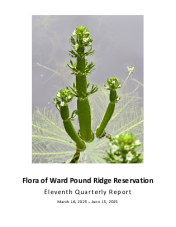
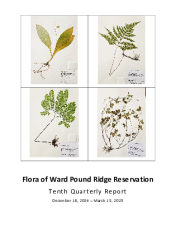
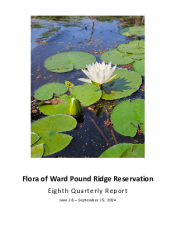
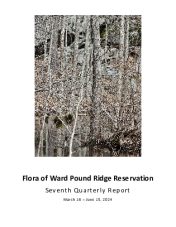
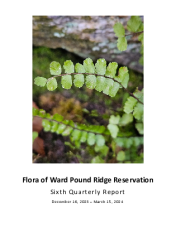
The objective of the Flora Project at Ward Pound Ridge Reservation is to preserve a specimen of every vascular plant species growing spontaneously in the park and to identify and document the ecological communities, prioritizing those of conservation concern. The collection of pressed herbarium specimens of each plant species provides a physical record available for botanical study. The project expands and improves upon the historic records of the reservation by creating an easily accessible resource for conservation efforts by providing a precise and detailed data set and scientifically verifiable records, enabling park management to identify priority plant species and communities for conservation efforts.
Become a member today and support our research
Your membership supports the Friends of Trailside Nature Museum, a registered 501(c)3 organization, dedicated to promoting a better appreciation and understanding of the natural world and the relationship between people and the land.
6th Quarterly Report December 16, 2023–March 15, 2024
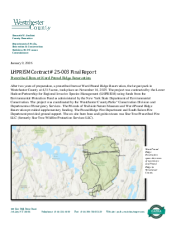
Prescribed Burn Final Report
After two years of preparation, a prescribed burn at Ward Pound Ridge Reservation, the largest park in Westchester County at 4,315 acres, took place on November 14, 2025. The project was contracted by the Lower Hudson Partnership for Regional Invasive Species Management (LHPRISM) using funds from the Environmental Protection Fund as administered by the New York State Department of Environmental Conservation. The project was coordinated by the Westchester County Parks’ Conservation Division and Departments of Emergency Services. The Friends of Trailside Nature Museum and Ward Pound Ridge Reservation provided supplementary funding.
Prescribed Burn Final Report
January 9, 2026
Citizen Science Programs
Get involved in one of our citizen science programs and help us monitor the natural world around us.
Bluebird and Nest Monitoring Help us monitor our nest boxes in the park this Spring. Call the museum at (914) 864-7322 or stop by to learn how!
Ward Pound Ridge Reservation Biodiversity Club Join the club! This iNaturalist group is easy to join and allows you to share interesting sightings or helps you identify new ones. The goal of this group is to catalog and share the animals and plants that are seen in Ward Pound Ridge Reservation. Call the museum or stop by to learn more!
Turtle Program
In the spring of 2018, the Friends of Trailside Nature Museum supported two ongoing research projects on turtles. The first project looks at tracking wood turtle land use corridors in Ward Pound Ridge Reservation in order to help inform our land use management plan. The second project aims to engage citizen scientists at the reservation in research on painted turtles.
In 2019, we discovered five species of turtles with a total of 75 turtle sightings. We were able to engage 85 students in research from local middle schools and high schools.
Thank you to the Friends of Trailside for helping fund this research!
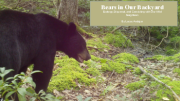
Bears in Our Backyard
This presentation explains black bear biology, behavior, dispersal, and ways humans can safely coexist with them. Black bears typically weigh 150–600 pounds, stand about 3 feet on all fours and up to 7 feet upright, and have highly developed senses, especially smell. They are excellent climbers, fast runners (up to 30 mph), strong swimmers, and efficient hibernators. Cubs are born in winter, stay with their mother for about 1.5 years, and then disperse—males traveling farther than females. Bears can live 20–30 years in the wild.
The presentation concludes with state wildlife agency contacts for reporting sightings, damages, or dangerous bear behavior, as well as conservation resource links.
Bears in Our Backyard
Ecology, Dispersal, and Coexisting December 16, 2024