by Leah Cass
With its habitat mosaic of forests, meadows, wetlands, ponds, and streams, Ward Pound Ridge Reservation provides ideal habitat for many important wildlife species. One such species is the eastern box turtle (Terrapene carolina carolina), and while this elusive animal may not make frequent appearances to park visitors, their presence on the landscape influences park management decisions. So who are these unique reptiles and how is their presence at Ward Pound Ridge Reservation influencing park management?
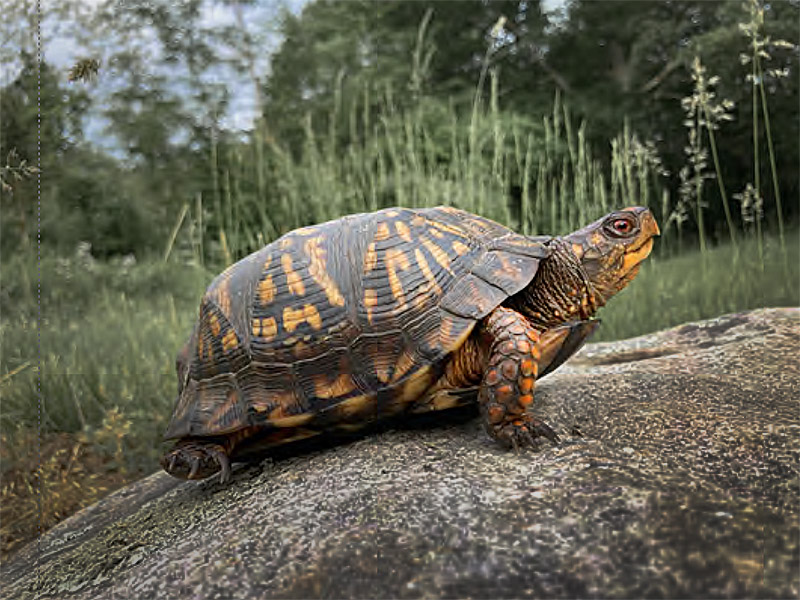
Box turtles are a medium-sized dome-shaped species that can be identified by vibrant yellow/orange markings on their otherwise brown colored carapace (top shell). They are so-named because their plastron (lower shell) is hinged, allowing them to fully close themselves within. Box turtles are the most terrestrial species of turtle in the northeastern United States, spending much for their time in meadow or shrub-dominated habitat but also entering forest and wetland areas. An omnivorous species, box turtles will consume plant matter and fungi as well as insects, slugs, snails, and earthworms.
Like most turtles, this species is long-lived, often reaching ages of over 50 years in the wild. They mature slowly, not reaching sexual maturity until ages five to 10. Once reproductively active, they typically rely on chance encounters to find mates. Successful female box turtles will then nest in May or June by locating an area of dry, sandy soil where she can dig a small hole and deposit about four to five eggs.
Despite their long life span, box turtle populations have been facing declines throughout their range due to habitat loss and fragmentation, nest predation, and poaching for the pet trade. Habitat fragmentation poses a major threat to turtles, especially when roadways bisect wetlands or separate nesting habitat sites from primary habitat patches. Additionally, nest predation by raccoons or other medium-sized predators causes the destruction of a significant number of turtle nests in this region.
Given the multitude of threats facing box turtles, creative land-management solutions are often required to promote turtle conservation. To identify possible strategies for protecting box turtles at Ward Pound Ridge Reservation, staff have undertaken a turtle monitoring initiative funded by the Friends of Trailside Nature Museum.
This initiative aims to survey suitable box turtle habitat to identify individuals, locate and protect nesting sites, and identify areas most commonly used by box turtles where land management for their conservation can be prioritized. Efforts undertaken as part of this initiative have included keeping detailed records of all box turtles encountered in the park and hosting conservation dog surveys during which a trained turtle-smelling dog aids staff in locating this elusive reptile.
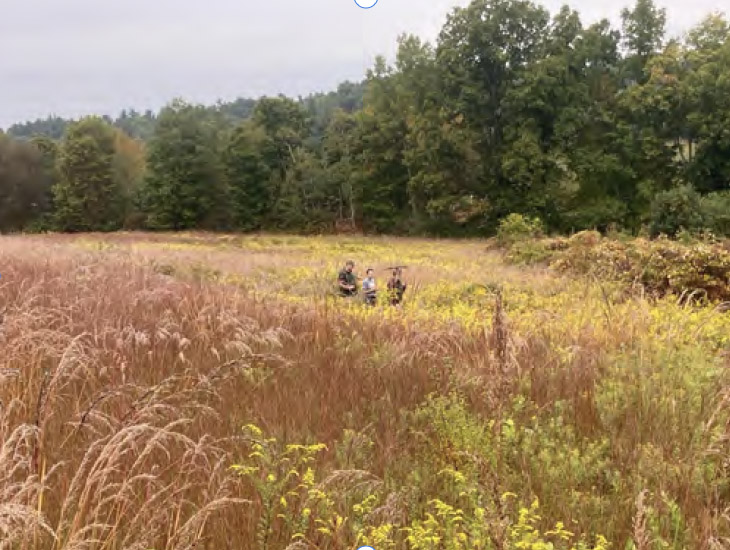
While our turtle conservation work is ongoing, information gathered by the project has already been integrated into park management planning. Most notably, mowing schedules to maintain meadow habitat around the Reservation are carefully planned around turtle activity, especially in fields most commonly used by turtles. Efforts are made to mow during winter when box turtles are safely buried underground as they are at the time of this article’s publication. Box turtles, and our more common species such as painted and snapping turtles, will remain completely hidden from human observation throughout the rest of the winter. Your best chance to observe a turtle in the Reservation is by visiting in May or June when nesting snapping turtles become a common sight along the roadsides, especially around Kimberly Bridge. However, if you are lucky enough to see a box turtle this spring or summer, be sure to stop by and let us know. Your observations can help us ensure our shelled-neighbors persist in this special place for generations to come.
View our full Winter 2026 Newsetter (PDF)