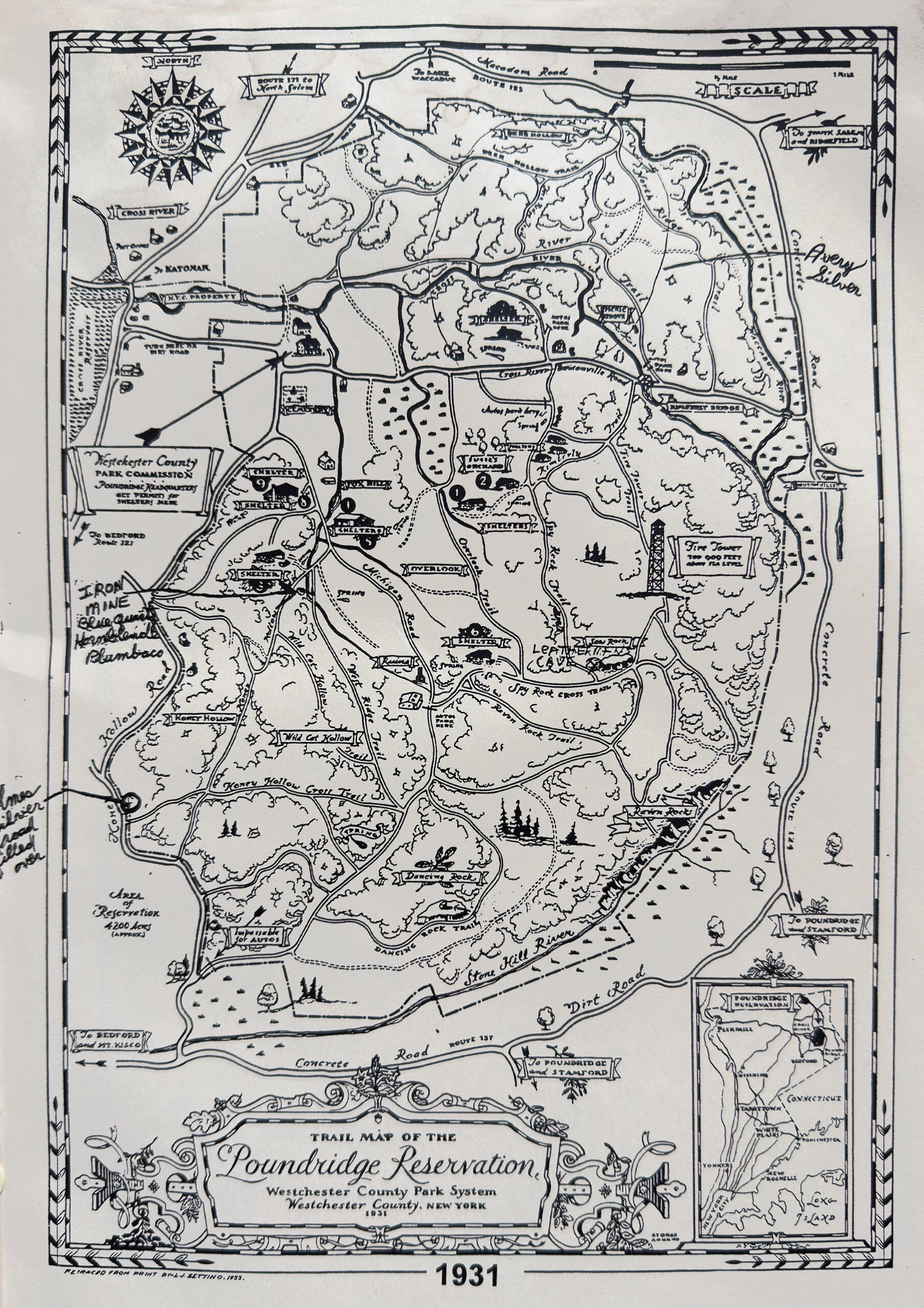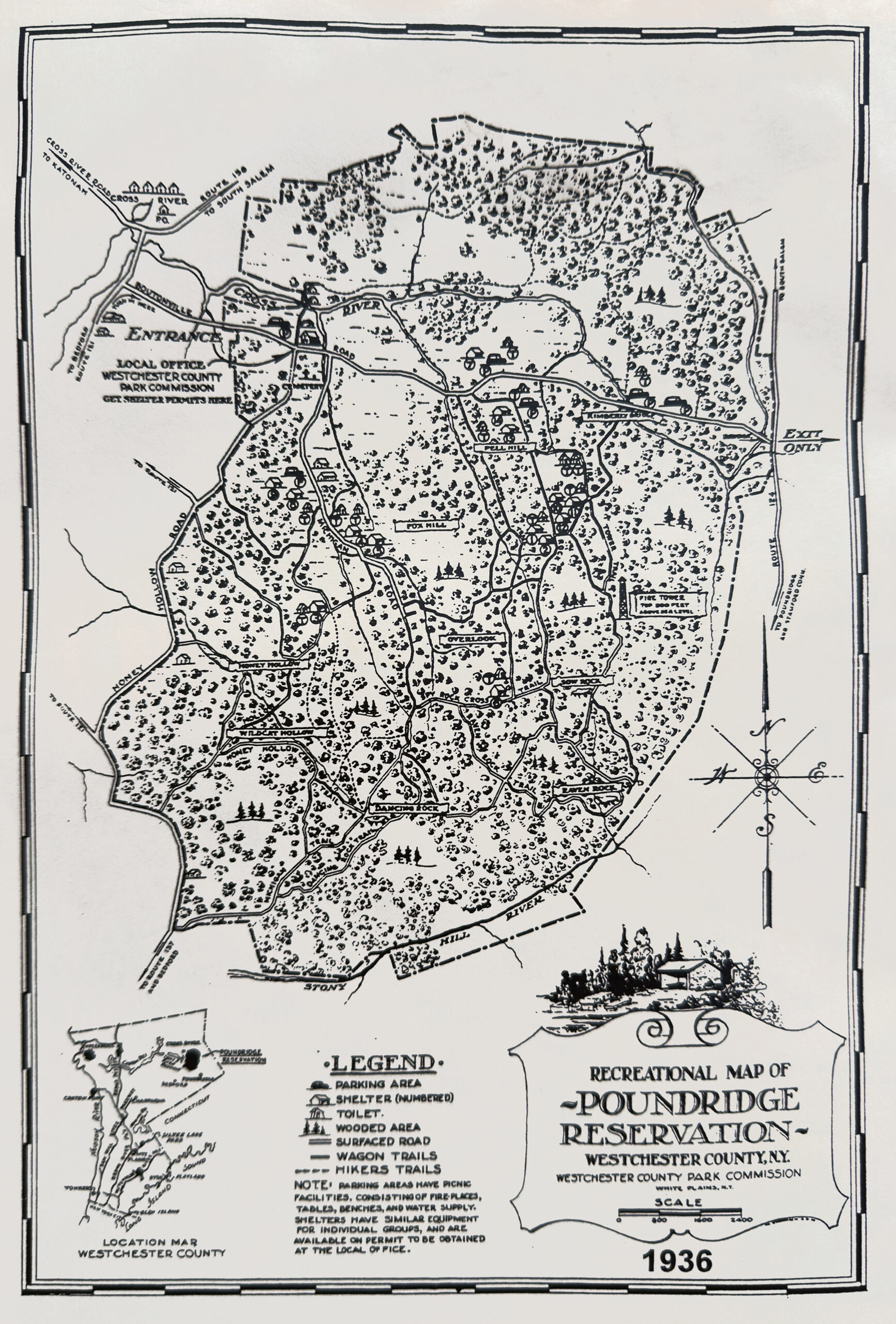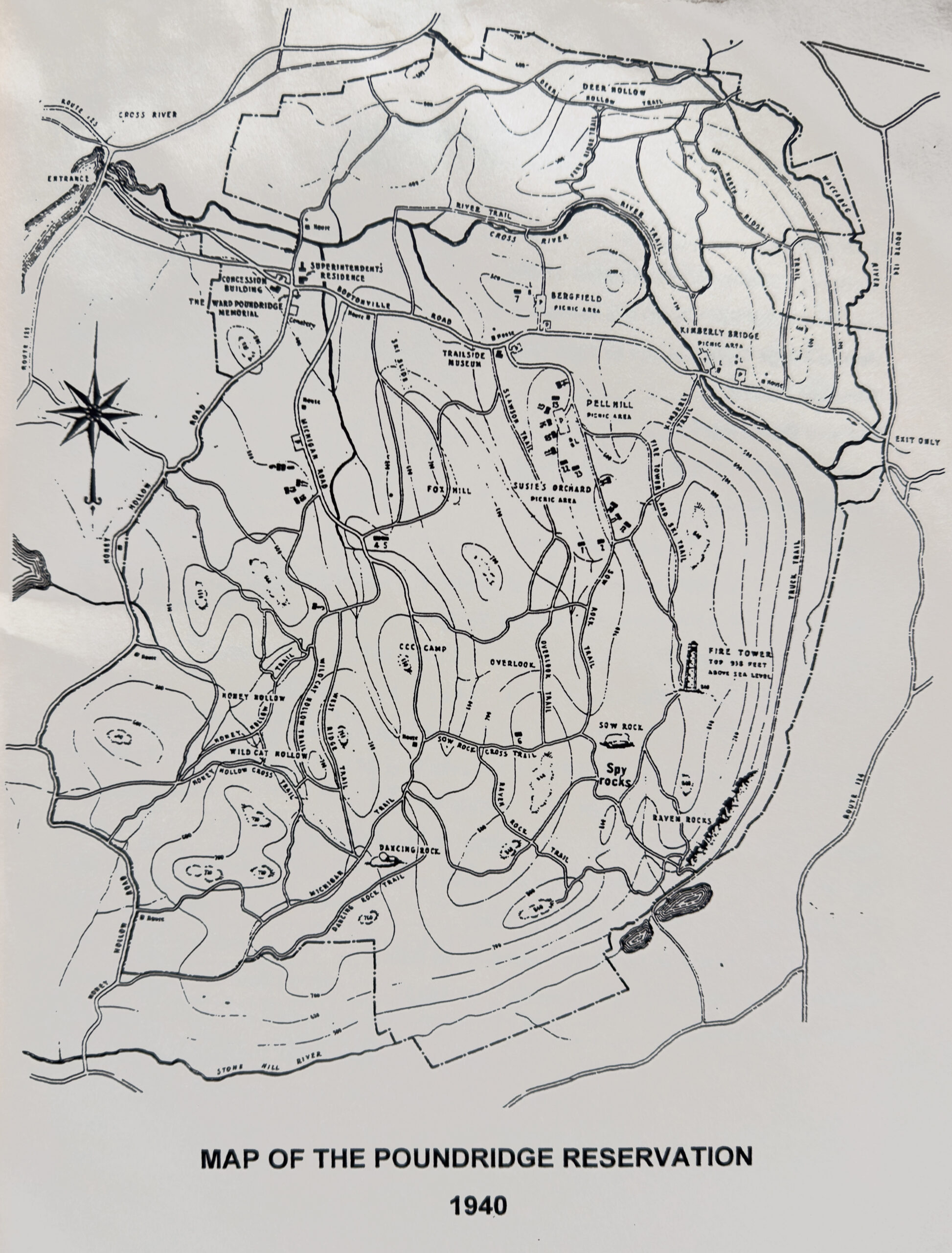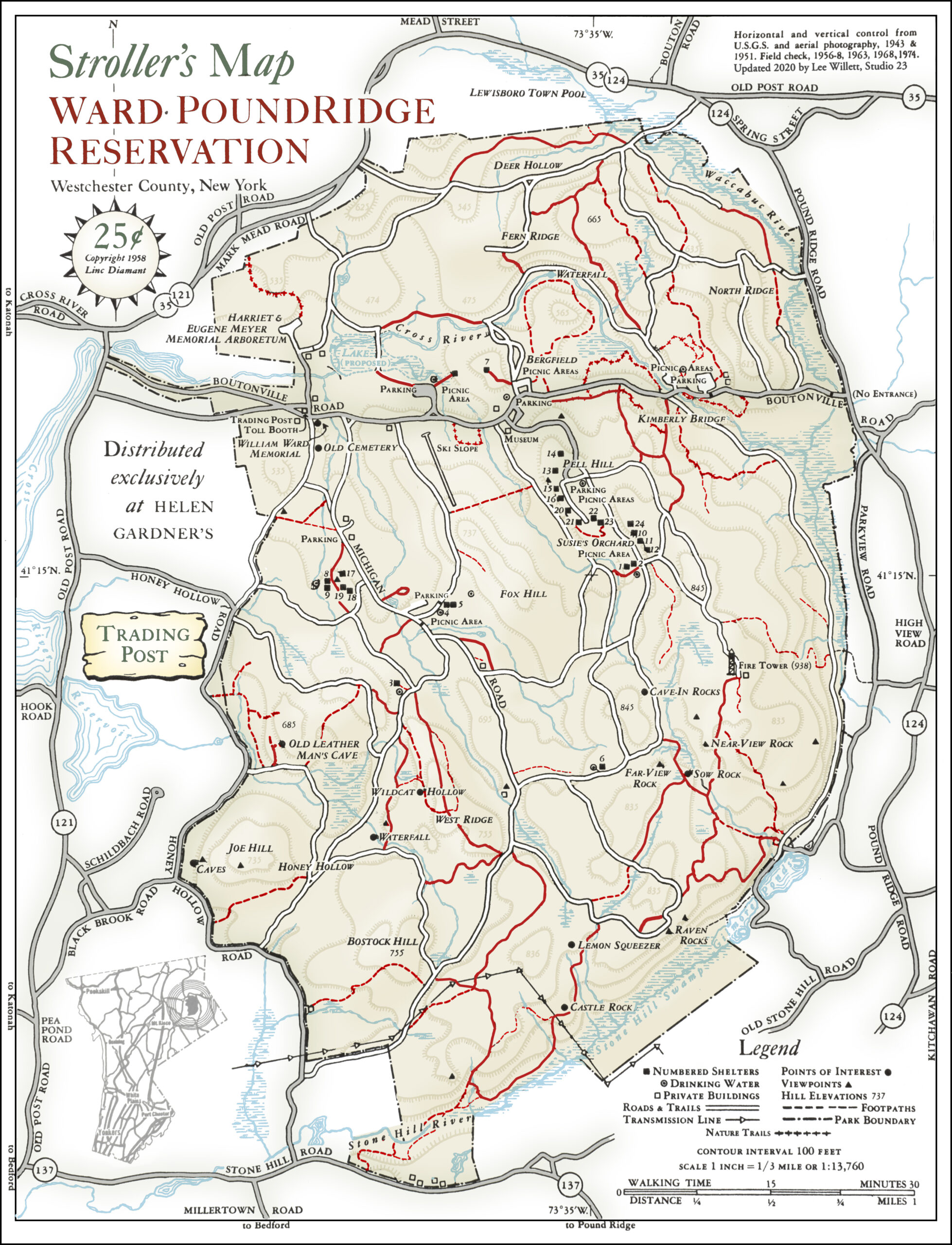
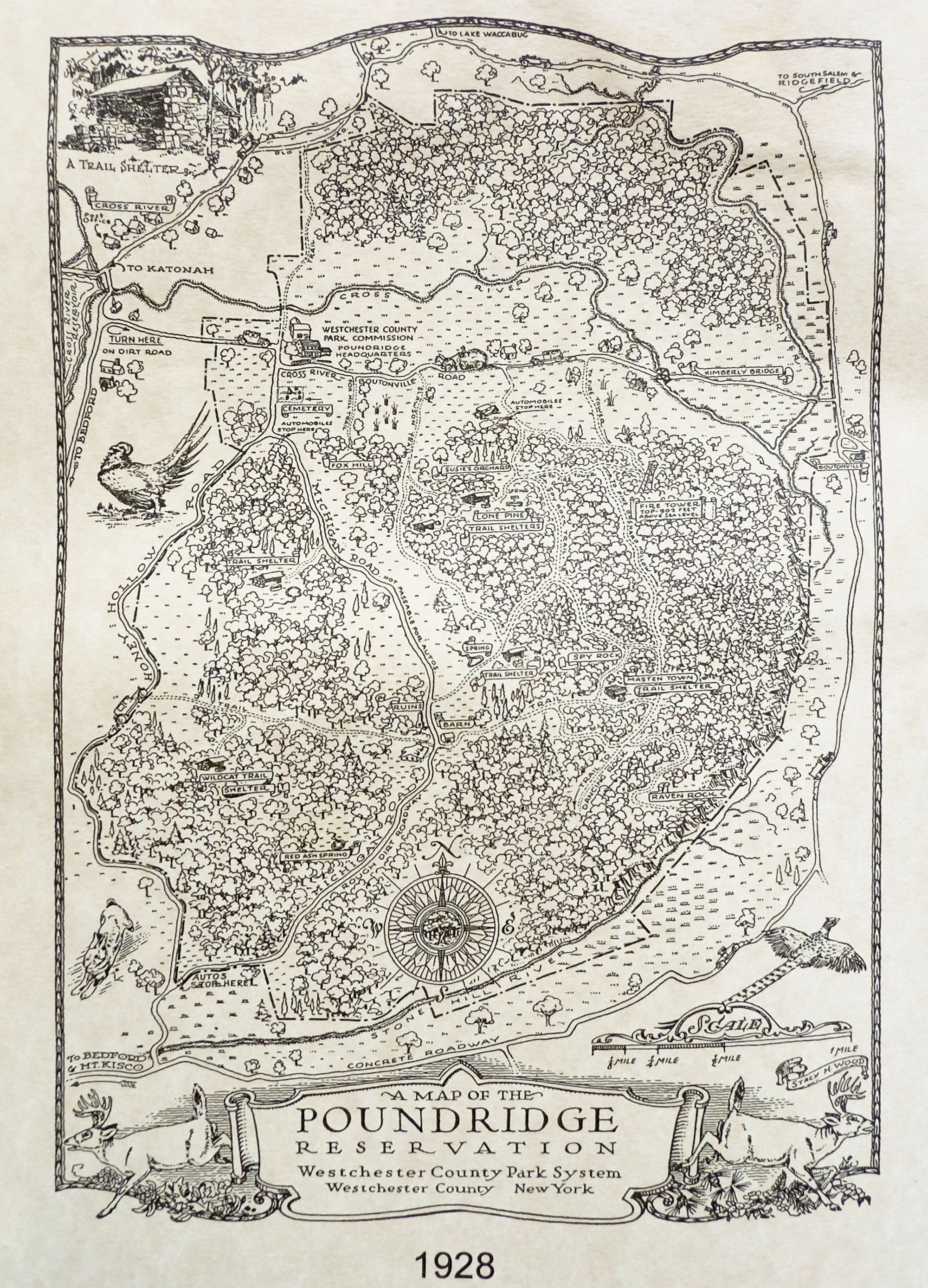
 Over the past 100years, Ward Pound Ridge Reservation has witnessed many changes to its more than 4,000 acres, both in usage and in philosophy of management and availability to the residents of Westchester County and neighboring communities. Established as a forest preserve in 1925 and managed for wildlife benefit and reforestation, there were no trails, interpretive maps or exhibits. With hands-on enthusiasm the Bedford Garden Club stepped in and hired William Wheeler of Katonah, a naturalist and bird enthusiast, to “blaze” one of the first nature trails in New York State with the encouragement and help of Hermann Merkel, the Westchester County Parks Commission superintendent. Mr. Merkel obtained $3600 from the U.S. Department of the Interior for this project.
In 1933, as part of President Roosevelt’s New Deal Administration, Civilian Conservation Corps Camp Merkel was established in the Reservation and remained until the program ended in 1942. The CCC enlisted unmarried men between the ages of 17 and 28 to work in conservation projects throughout the United States and its territories. The enlistee received $30 a month of which he had to send $25 back to his family. Under CCC management the Trailside Museum was built and completed in 1937. Roads were built and camping shelters were constructed; a huge reforestation program was undertaken to replace the thousands of trees lost to the Chestnut Blight that had devastated Westchester County over the first quarter of the 20th century and the elms that were being destroyed by Dutch Elm disease in the 1930s. Roosevelt’s Tree Army planted 500,000 pines, hemlocks and spruces throughout the park’s 4,371 acres; many of these pines greeted visitors until a major blowdown destroyed the woods along the Reservation entrance road a couple of decades ago. Other giants still hold watch over acres of the reservation forest. The BGC kept Trailside Museum going through WWII paying Mr. Wheeler’s salary and it established the wild-flower garden still welcoming visitors today.
The 1920s and 1930s were ripe for the establishments of nature parks and preserves to provide everyone a place to experience the outdoors and to observe and appreciate nature up close with nature trails and forests and fields to explore. Our beloved Reservation was stitched together like a quilt from 92 separate parcels from 55 owners, some of which had been farmed for generations by the same family, some from real estate investors, and some by eminent domain. There are stories of resentment from those whose land was obtained through eminent domain, although all were monetarily compensated. Former Trailside Friends Board of Trustees member, Phil Pessoni, documented this history of The Res’s formation in his book, Historical Notes on the Ward Pound Ridge Reservation: 1640 – 1940. With unpaved roads and minimal facilities, early park visitors could explore over 4,100 acres of streams, forests, meadows and incredible geological formations undisturbed by city noises and other adventurers.
In 1926 the Cross River Mountain fire tower was built. It was operated by the Westchester Parks Commission until 1930 when the New York State Conservation Department took over. The tower was decommissioned in 1971 and dismantled in 1982. A replacement tower is now being built in the same location and park visitors will soon be able to enjoy the magnificent 100-mile view of those earlier years.